Team

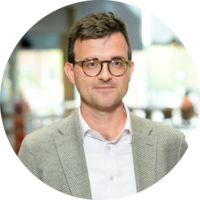
Ulrich Schmiedel is the PI of FABRIC and Professor of Global Christianities at Lund University. Specializing in public and political theology, he has written widely on the role of religions in the public square. Currently, his research concentrates on the significance of diversity for migrant and postmigrant societies. As FABRIC's PI, Ulrich is responsible for research design, delivery, and dissemination. His own contribution explores the impact that faith-based and multi-faith-based refugee relief has on public discourse and political debates across Europe.

Susanna Trotta is a Postdoctoral Researcher in the FABRIC project at Lund University, beginning in the 2026/27 academic year. She has a mixed background as both a researcher on religion and migration and a practitioner in refugee reception facilities in Italy and Germany. Her main interests lie at the crossroads of migration and religious studies, with a focus on religious communities as key actors in migration processes. She has published internationally in this field and in related research areas, such as child protection in contexts of displacement, religious literacy in migration policy, and the role of faith actors in shaping and using new technologies. Within FABRIC, she is looking at the ways in which faith-based organisations perform refugee relief in different European countries. Susanna is also a trained musician and is interested in the aural dimension of research on religion and migration.
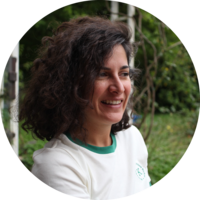
Inci Öykü Yener-Roderburg is a Postdoctoral Researcher and Project Coordinator for FABRIC at Lund University. Her research examines how public institutions, civil society, and faith-based actors respond to forced migration, connecting empirical insights from faith-based organisations to broader debates on migration governance, social inclusion, and refugee reception. She is also interested in transnational political engagement, citizenship, external voting, and qualitative research methods. Within FABRIC, she investigates how faith-based diaspora organisations engage in refugee relief across Europe. She is currently developing research on religious literacy in AI systems and interfaith dialogue technologies, exploring how digital tools can foster collaboration between faith-based and secular actors and support more effective refugee reception and integration.

Dianne van den Bosch is a PhD Candidate in Ethics at Lund University. Within FABRIC, her research examines how refugee relief is practiced in migration contexts. Guided by an ethic of care, she combines empirical and conceptual methods to explore how foregrounding refugees’ experiences and narratives may enable a rethinking of care that advances more just and effective practices. She focuses in particular on faith-based organisations in European border spaces. By bringing together relational, refugee-led, and faith-based practices, her PhD project seeks to develop a framework of care that is ethically grounded, critically attentive, and responsive to the realities of those it serves.

Elise Lindkvist is a PhD Candidate in Global Christianity and Interreligious Relations at Lund University. She has 13 years of parish experience as a priest in the Church of Sweden, including teaching theology at the Church of Sweden Institute for Pastoral Education. Her research has focused on Christian-Muslim relations, the relationship between faith and the secular, and religious literacy (as a resident fellow at Harvard Divinity School). Within FABRIC, Elise explores how the 2025 requirements for faith-based actors to apply for funding in Sweden affect the practices of Christian and Muslim faith communities. Here, she combines document analysis with empirical work to explore the theological reasoning motivating Christian and Muslim faith communities in their work with migrants.

Jonathan Morgan is a researcher in ethics. Between 2025 and 26, he was associate postdoc in FABRIC at Lund University. His work lies at the intersection of migration, religion, and public institutions. In connection with FABRIC, he investigated how officers at the Swedish migration agency (Migrationsverket) define religion through their encounters with people claiming asylum on the grounds of conversion to Christianity. Before moving to Sweden in 2016, he spent six years working with faith-based organisations in southern Africa and the Middle East.
The core team is supported by a consulting team consisting of Ryszard Bobrowicz (University of Bonn), Valentina Napolitano (University of Toronto), Regina Römhild (Humboldt University Berlin), Yafa Shanneik (Lund University), William Storrar (CTI Princeton / University of Edinburgh), and Alana Vincent (Umeå University).